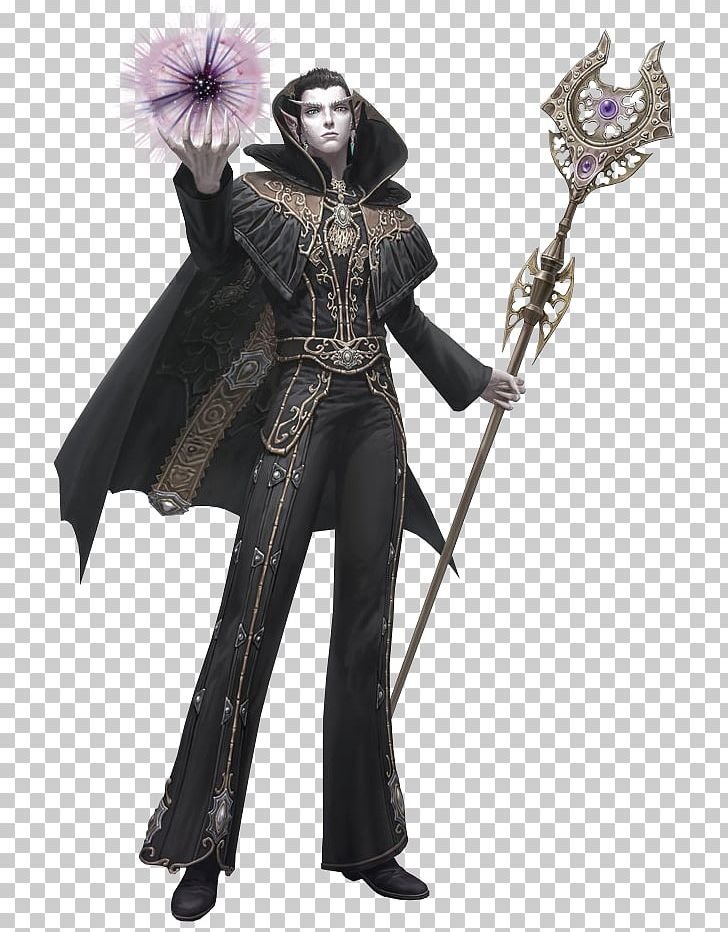
In the vast tapestry of fantasy, few figures cast a shadow as long and complex as the Dark Elf. Far from being mere villains, these enigmatic beings have evolved dramatically across various media, challenging simplistic notions of good and evil while captivating audiences with their intricate cultures, formidable powers, and often, their tortured souls. Dive into the world of Dark Elves in Popular Culture & Fiction and discover why these denizens of the deep, the treacherous, and sometimes, the misunderstood, continue to define and defy our expectations.
At a Glance: Decoding the Dark Elf
- Origin Story: Traced back to Germanic mythology's Dökkálfar (dark elves) or Svartálfar (black elves), often linked with dwarves or 'gray ones.'
- Tolkien's Touch: J.R.R. Tolkien introduced the Moriquendi, or "Elves of Darkness," who chose not to see the light of Valinor, setting a precedent for 'lesser' or distinct elven types.
- Core Characteristics: Often depicted as aggressive, deceitful, stealthy, brutal, and cruel, thriving in dark places. However, these traits are frequently challenged by nuanced portrayals.
- Societal Structures: Range from matriarchal, spider-worshipping societies (D&D Drow) to honour-bound warrior clans (Midkemia) or sophisticated yet decadent empires (Warhammer 40,000 Dark Eldar).
- Visuals: Commonly dark-skinned (grey, purple, blue), white-haired, and with distinctive eye colours (red being common).
- Not Always Evil: While often antagonists, modern interpretations increasingly feature anti-heroes or protagonists who defy their dark origins, like Drizzt Do'Urden.
- Ubiquity: Found across tabletop RPGs, video games, novels, comics, and more, proving their enduring appeal as a fantasy archetype.
Roots of Darkness: Mythology and Early Influences
The concept of a "dark elf" isn't merely a modern fantasy trope; it has roots stretching back into ancient Germanic mythology. Here, we encounter the Dökkálfar (dark elves) and Svartálfar (black elves), often contrasted with the more radiant Ljósálfar (light elves). While the exact nature of these mythical beings is debated by scholars, they were generally associated with the subterranean, with craftsmanship (sometimes linked to dwarves), and perhaps with a grimmer disposition. They were not necessarily evil in the modern sense but certainly distinct from their ethereal, shining counterparts.
Fast forward to the 20th century, and the groundbreaking work of J.R.R. Tolkien provided a foundational template for modern fantasy elves. In his Middle-earth lore, the Moriquendi, or "Elves of Darkness," were those who never journeyed to Valinor and thus never saw the light of the Two Trees. They weren't inherently evil—many simply chose to remain in Middle-earth—but they were considered less skilled and wise than the Calaquendi, or "Light Elves." This distinction, based on choice and exposure to divine light, laid the groundwork for future fantasy writers to explore differing elven factions and their moral complexities.
Defining the Shadows: Core Traits and Evolving Tropes
Across the vast landscape of popular culture, a set of common characteristics tends to define dark elves, yet these definitions are constantly being re-evaluated and expanded upon.
At their core, dark elves are frequently portrayed as:
- Aggressive and Warlike: Quick to violence, preferring conquest and dominance.
- Deceitful and Cunning: Masters of subterfuge, manipulation, and espionage.
- Stealthy and Shadow-Dwelling: Often preferring subterranean cities, dark forests, or urban shadows, with an aversion (though not always a weakness) to direct sunlight.
- Brutal and Cruel: Showing little mercy, delighting in the suffering of others, often engaging in torture or ritual sacrifice.
- Insular and Xenophobic: Wary of other races, sometimes viewing them as inferior or as a resource to be exploited. Interbreeding is rare, often associated with demonic pacts or forced unions.
- Fractured Societies: Despite uniting against common foes, internal strife, power struggles, and betrayals are common within dark elf societies.
However, modern fiction often plays with these tropes. The most compelling dark elves are rarely one-dimensional. Their "evil" might stem from a cursed origin, a survivalist mentality, or a unique philosophical outlook. What truly defines a dark elf often comes down to their relationship with power, their environment, and their internal struggles against (or embrace of) their darker natures.
Iconic Depictions: A Journey Through Fantasy Worlds
From tabletop games to epic sagas, dark elves have taken on myriad forms, each offering a unique twist on the archetype.
Dungeons & Dragons' Drow: The Matriarchal Menace
Perhaps the most famous iteration of dark elves, the Drow from Dungeons & Dragons (D&D) have shaped the popular imagination for decades. Introduced in the late 1970s, Drow are typically depicted with obsidian-dark skin, stark white hair, and piercing red eyes.
Residing in the vast subterranean network known as the Underdark, their society is a terrifying, intricate web of power, treachery, and cruelty, almost universally ruled by priestesses of the demon spider goddess Lolth. Matriarchy is absolute, with male Drow relegated to lesser roles as warriors, wizards, or servants. Their cities, like the infamous Menzoberranzan, are bastions of dark magic and brutal social climbing, where assassination and betrayal are political tools.
The D&D Drow embody many of the classic dark elf traits: aggression, deceit, and an inherent cruelty. However, the saga of Drizzt Do'Urden fundamentally changed the perception of Drow. Drizzt, a benevolent and honorable male Drow, rejected the evil ways of his people and Lolth, fleeing the Underdark to seek acceptance on the surface world. His struggles, accompanied by his magical panther Guenhwyvar, became a cornerstone of fantasy literature, proving that even within the darkest race, individuality and morality can transcend ingrained evil. The Drizzt saga, particularly in R.A. Salvatore's novels, offered a powerful counter-narrative, allowing for more nuanced character development within dark elf lore.
While the "dark elf" term in Dragonlance denotes an outcast from elven society rather than a distinct subrace, the D&D universe also features other variations, such as the subterranean, magically mutated Shadow Elves of Mystara. Fighting Fantasy gamebooks also took clear inspiration from the D&D drow, adapting their cultural details for interactive adventures.
Warhammer's Druchii & Dark Eldar: Cruelty Unleashed
Games Workshop has masterfully crafted two distinct, yet equally brutal, dark elf factions in its iconic fantasy and science fiction settings.
Warhammer Fantasy: The Druchii of Naggaroth
In the grim world of Warhammer Fantasy, the Druchii, or Dark Elves, are a race born of betrayal and hatred. They are not subterranean dwellers but hail from the frozen, jagged lands of Naggaroth, a stark contrast to the verdant realms of their High Elf cousins. Their history is one of civil war, known as the "War of the Beard," ignited by their Witch-King Malekith and his sorceress mother Morathi.
The Druchii worship Khaine, the Lord of Murder, and their society is utterly steeped in sadism, ritual sacrifice, and slavery. They are merciless raiders, preying on other races to fuel their dark rituals and supply their slave markets. Figures like Shadowblade, an elite dark elf assassin, exemplify their deadly precision and ruthless efficiency. Unlike D&D Drow, their cruelty is often public and theatrical, a fundamental aspect of their culture rather than merely a means to an end.
Warhammer 40,000: The Kabals of Commorragh
Leaping into the far future, Warhammer 40,000 presents the Dark Eldar, or Drukhari. These are the descendants of the ancient Aeldari empire who revelled in depravity and excess, eventually leading to the birth of Slaanesh, the Chaos God of Pleasure and Pain, and the cataclysmic Fall of their civilization.
Residing in the shadowy, extra-dimensional city of Commorragh, the Dark Eldar are hedonistic pirates, raiders, and slavers. They suffer from "The Thirst," a spiritual malady that requires them to constantly consume the souls and suffering of others to stave off Slaanesh's clutches. Their society is a constant struggle for dominance among various Kabals, Wych Cults, and Haemonculi Covens, all striving to inflict the most exquisite torment. Their advanced technology is often fused with bio-alchemy and psychic manipulation, creating terrifying weaponry and grotesque vehicles designed for speed and agony. They represent the ultimate corruption of elven grace and intelligence, driven by an insatiable hunger for pain and fear.
The Elder Scrolls' Dunmer: Cursed, Complex, and Controversial
Bethesda's The Elder Scrolls series introduces the Dunmer, often simply called Dark Elves, as a major playable race, particularly prominent in Morrowind. Their striking appearance—dark-bluish or ash-grey skin and fiery red eyes—is a result of a divine curse.
Originally the Chimer, a proud, golden-skinned elven people, they were transformed by the Daedric Prince Azura after the betrayal and death of their revered hero, Nerevar. This curse was either for their hubris in embracing the Tribunal (false gods) or for the perceived murder of Nerevar. The name "Dunmer" literally means "Cursed Elves" in their language, though "Dark Elves" is often used as a more complimentary or neutral term by others.
The Dunmer are depicted as a conservative, proud, and often xenophobic people, deeply suspicious of "outlanders." They possess a long lifespan and a rich, complex culture rooted in ancestral worship and a harsh, volcanic homeland. Historically, they practiced chattel slavery, a controversial aspect of their lore that adds layers of moral ambiguity. Their magic is powerful, their warriors fierce, and their society, while often harsh, is structured and deeply traditional. The Dunmer illustrate a dark elf archetype that is not inherently evil, but rather shaped by a difficult history, a protective cultural identity, and a lingering curse.
EverQuest's Teir'Dal: Subterranean Sovereigns
In the influential MMORPG EverQuest (EQ) and its sequel, EverQuest II, the Teir'Dal are the Dark Elves. They are a playable race, allowing players to step directly into their shadowy shoes. The Teir'Dal are a highly prominent race, especially in EQII, where they are governed by the formidable Queen Cristianos Thex from their sprawling subterranean capital city, Neriak.
Their lore often describes them as arrogant, ambitious, and deeply entwined with dark magic and ancient, often malevolent, deities. They are a force to be reckoned with, both politically and militarily, asserting their dominance from beneath the surface. Playing a Teir'Dal often means navigating a world that distrusts you, while simultaneously grappling with the internal politics and sinister machinations of your own people.
Midkemia's Moredhel: Slaves to Power
Raymond E. Feist's Riftwar Saga introduces the moredhel, a race explicitly known as "dark elves" in the series. Their origins are tied to ancient history, as both the moredhel and their benevolent cousins, the eledhel (light elves), were once slaves of the powerful, god-like Valheru. The field slaves eventually became the eledhel, content with their simpler lives. The house slaves, however, imbued with their masters' dark knowledge and desires, transformed into the moredhel, inheriting a lust for power and a warlike nature.
The moredhel adhere to a strict "might makes right" philosophy and mostly inhabit the harsh Northlands and Triagia. While generally antagonists, Feist explores nuances; some moredhel "Return" to live peacefully with the eledhel, only to face violent retribution from their former kin. Characters like Gorath, a renegade moredhel who sought to warn Prince Arutha ConDoin, highlight the potential for individual agency and heroism, even within a largely villainous race.
Final Fantasy's Early Dark Elf Encounters
The Final Fantasy series, particularly its early installments, featured dark elves as significant adversaries, showcasing the archetype's adaptability within jRPG narratives.
In the very first Final Fantasy, players encounter Astos, the Dark Elf king, who has cast a sleeping spell upon an elf prince. Defeating him requires specific actions and items, illustrating his role as a magical antagonist tied to a specific questline.
Final Fantasy IV (released as Final Fantasy II in North America) features another notable Dark Elf boss in the Lodestone Cavern. This powerful foe is depicted as having a magnetic field, making metallic weapons useless. Edward's music is key to disrupting this field, allowing the party to attack. The Dark Elf then transforms into the fearsome Dark Dragon, adding a layer of thematic evolution to the encounter. These portrayals cemented the dark elf as a magical, often transforming, threat in early video game fantasy.
Record of Lodoss War: Nuance in the Shadows
The Record of Lodoss War series, a seminal work in Japanese fantasy, offers a different take on dark elves. Here, the brown-skinned dark elves are not inherently evil. While often aligned with the dark kingdom of Marmo and serving as antagonists to the heroes, individual dark elves demonstrate depth, loyalty, and even love.
Pirotess, a prominent dark elf character, is a prime example. Her loyalty to Emperor Beld and later, Ashram, is unwavering, and she displays honor and a capacity for genuine affection. This depiction diverges from the purely malicious stereotype, showing that a dark elf's allegiance might be driven by personal conviction rather than an inherent moral alignment.
Shadowrun's Night Ones: Modern Urban Myths
Shadowrun, the cyberpunk-fantasy tabletop RPG, blends high technology with classic fantasy races. Its version of dark elves are known as Night Ones, a metahuman elf subgroup characterized by an aversion to sunlight and a fine fur coat.
Often stereotyped and marginalized, Night Ones embody the "dark elf" label not just by appearance or preference for the shadows, but also by societal perception. They are not necessarily evil but often fall into roles that thrive in the dark underbelly of a neon-drenched future, becoming hackers, assassins, or information brokers. This interpretation shows how ancient archetypes can be recontextualized within a modern, gritty setting, where the "darkness" is as much social as it is magical.
Other Notable Appearances and Variations
The dark elf archetype continues to proliferate, adapting to the unique demands of each setting:
- Bungie's Myth series and InXile Entertainment's The Bard's Tale (2004 video game): Trows are featured as dark elf-like creatures, often monstrous or savage, highlighting a more primal interpretation. Jeremy Grey in Laurell K. Hamilton's Merry Gentry series also uses "Trow" to denote a specific type of dark, dangerous fae.
- Elizabeth Moon's The Deed of Paksenarrion: Dark elves are depicted as a sect following evil gods, reinforcing the idea of moral alignment as a choice or dedication to malevolent forces.
- Mega Man Zero series: The "Dark Elf" is a corrupted entity—initially the benevolent "Mother Elf," cursed by Dr. Weil into a destructive force. Its eventual transformation back after Omega's defeat signifies a return from darkness, a redemption arc for an artificial intelligence.
- Yrth: In the GURPS setting of Yrth, dark elves are a xenophobic offshoot who believe non-elves are an aberration. They use powerful magic to reshape nature and were responsible for the Banestorm effect, which brought other races to Yrth, demonstrating a more active, almost god-like, role in shaping their world's destiny.
- Might and Magic VIII: Playable red/brown-skinned dark elves in Alvar on Jadame are surprisingly depicted as peaceful, challenging typical genre expectations.
- Heroes of Might and Magic V (Ashan): A faction of dark elves lives in vast tunnel networks, descendants of Queen Tuidhanna, and are blamed for catastrophic events like the burning of Brythigga, solidifying their role as agents of chaos or destruction.
- Fading Suns (Ur-Ukar): This science fiction setting reinterprets dark elves as the Ur-Ukar, who are not inherently evil but prone to direct, sometimes violent, behavior and moral ambiguity. Their "darkness" lies in their confrontational nature and capacity for ruthless pragmatism.
Beyond the Shadows: Subverting the Stereotype
The enduring popularity of dark elves is not just in their capacity for villainy, but in their potential for complexity and subversion. Characters like Drizzt Do'Urden paved the way for many others who defy the cruel societies they were born into. These narratives explore themes of identity, free will, and the struggle against prejudice, both from their own kind and from surface dwellers.
When a dark elf becomes a hero or an anti-hero, they often become even more compelling than their "light" counterparts. Their journey is fraught with internal conflict, the legacy of their lineage, and the constant battle to prove their worth. This adds layers of dramatic tension and allows for profound explorations of morality and what it truly means to be "good" or "evil."
Consider the many stories where a dark elf forms unlikely alliances with other races, or where their unique skills in stealth and subterfuge are turned towards heroic ends. These tales challenge us to look beyond superficial appearances and inherited reputations, reminding us that true character is forged through choices, not birthright.
Crafting Your Own Dark Elf Lore
For writers, game designers, or storytellers, the dark elf archetype offers a rich canvas. You can lean into the classic tropes of cruelty and shadow, or you can dismantle them, building a society that defies expectations.
When developing your own dark elves, consider:
- Their Origin: Is their darkness a curse, a cultural choice, an evolutionary adaptation, or a result of historical trauma?
- Their Society: Is it matriarchal, feudal, anarchic, or something entirely new? What are its core values, even if those values seem cruel to outsiders?
- Their Relationship with Light: Do they merely prefer darkness, or does sunlight actively harm them? How does this influence their architecture, daily life, and military tactics?
- Their Magic/Technology: Do they wield dark sorcery, advanced psychic powers, or highly specific technologies? How does this reflect their values?
- Their Morality: Are they universally evil, or do they possess a complex moral code? Are there individuals who deviate from the norm, and what are the consequences?
- Their Visuals: Beyond dark skin and white hair, what distinctive features set them apart? Do they have unique fashion, tattoos, or body modifications?
The richness of dark elf lore means there's always room for innovation. Whether you're planning a new character or an entire civilization, having a strong, evocative name is often the first step in bringing them to life. If you're pondering what to call your next formidable dark elf character or faction, a specialized tool can ignite your creativity. You might find some excellent inspiration with a Dark elf name generator to help set the tone for your creations.
The Enduring Allure of the Dark Elf
From the shadowy forests of Germanic myth to the digital realms of virtual worlds, dark elves have demonstrated remarkable adaptability and staying power. They are a mirror reflecting our own fascinations with power, corruption, redemption, and the allure of the unknown. Whether they are monstrous villains, complex anti-heroes, or tragic figures striving for a better path, dark elves compel us to explore the nuances of good and evil, challenging us to look beyond simplistic labels.
As popular culture continues to evolve, so too will the dark elf. They will undoubtedly continue to surprise us, serving as a powerful reminder that even in the deepest shadows, there is always a story waiting to be told.