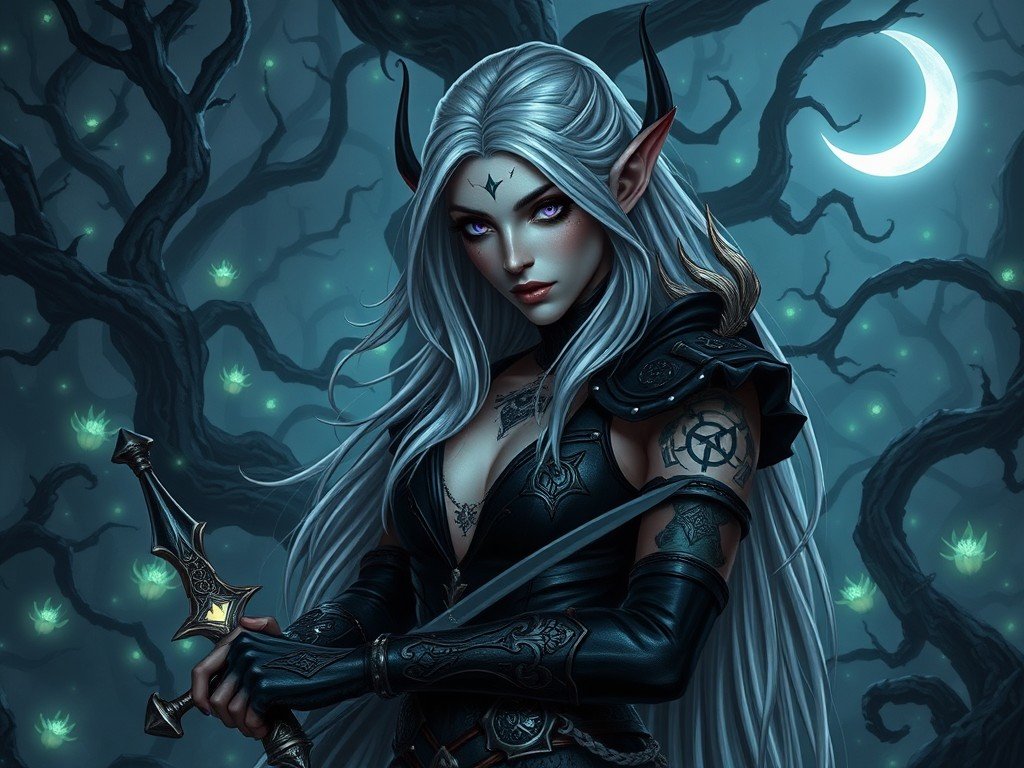
You’ve pictured them: their obsidian skin, eyes gleaming with cunning intelligence, a whisper of ancient power clinging to their aura. Whether they're a ruthless assassin, a calculating sorcerer, a proud noble, or even a reluctant hero forged in shadow, your Dark Elf character deserves a name that speaks volumes. But how do you go about forging a name that's as unique and compelling as your character's story?
It’s not just about picking something cool; it’s about crafting an identity. A well-chosen Dark Elf name can instantly convey their lineage, personality, and even their dark intentions or hidden virtues. This guide will arm you with the principles, lore insights, and practical tools you need to find that perfect, resonant name.
At a Glance: Choosing Your Dark Elf Name
- Understand Dark Elf Lore: Dunmer (Elder Scrolls), Drow (D&D), and Warhammer Dark Elves each have distinct naming styles and cultural nuances.
- Embrace Harsh Sounds: Many Dark Elf names use guttural consonants (K, Z, G, T) and sibilants (S, Sh, Ch) to evoke a grim, powerful feel.
- Consider Meanings: Names often reflect darkness, night, cruelty, deception, or power.
- Balance with Melody: While harshness is key, some names incorporate smoother sounds (L, N, S) to add an elven grace, even if twisted.
- Personality First: Let your character's temperament, backstory, and moral alignment guide your choices.
- Generator as a Starting Point: Use a Dark Elf name generator to spark ideas, then refine them to fit your vision.
- Test It Out Loud: Say the name multiple times to ensure it feels right and rolls off the tongue.
Who Are Dark Elves, Anyway? More Than Just "Evil Elves"
Before you can name your Dark Elf, it helps to understand who they are across the vast landscapes of fantasy. Unlike their typically benevolent high or wood elven kin, Dark Elves—often known as Dunmer in The Elder Scrolls or Drow in Dungeons & Dragons—are typically depicted with dark skin, keen intellect, and often a dangerous, cunning edge. They are powerful, fast, and, yes, often possess a vicious streak. They might lie, cheat, torture, or resort to violence without mercy or fear to achieve their aims.
However, to label them all as simply "evil" would be an oversimplification. While many are manipulative and ruthless, their actions can sometimes stem from justified reasons, a desperate struggle for survival, or a complex code of honor. This nuance is crucial when considering your character's name; it hints at their specific moral compass. The concept itself actually traces its roots back to Old Norse mythology, giving these characters an ancient, almost primal feel that has been reinterpreted across countless fantasy worlds.
Different fantasy universes interpret Dark Elves in unique ways, and these distinctions profoundly influence their naming conventions. You'll find that a name perfectly suited for a Dunmer might sound out of place on a Drow, and vice-versa.
The Elder Scrolls: The Resilient Dunmer
In the world of Nirn, particularly the province of Morrowind, Dark Elves are known as Dunmer. They are a proud, ash-skinned people, transformed by a curse long ago, making them distinct from the general elven stock. Their society is complex, often governed by Great Houses and fiercely independent.
Dunmer names, like Aleri, Ervona, Llandras, or Tythis, often have a more grounded, almost guttural quality compared to the more sibilant Drow names. They are rooted in fictional languages like Aldmeris and Dunmeris, which unfortunately means there are no direct real-world translations available. This gives you a lot of creative freedom to invent meanings yourself.
A specific sub-group, the Ashlander Dunmer, who live nomadic lives in the harsh ash wastes, have names that sound strikingly different. Examples like Ababel or Asharapli suggest an inspiration from ancient Assyrian and Mesopotamian cultures, giving them an exotic, ancient desert nomad feel. If your character hails from these tribes, your name choice should reflect that distinct cultural background. To delve deeper into the rich history of the Dunmer, understanding their history and society is invaluable for choosing a name that truly fits.
Dungeons & Dragons: The Treacherous Drow
For players of D&D, the Drow are perhaps the most famous Dark Elves. Hailing from the Underdark, their matriarchal society reveres the Spider Queen, Lolth, and is steeped in intrigue, treachery, and dark magic. Drow names often reflect this sinister nature.
Names like Drizzt, Nalfein, Vierna, or Triel carry a distinct sound. Unlike Dunmer names, Drow names do often have specific meanings within the fictional Drow language. For instance, Alaundra translates to "Powerful match," while Drizzt is famously associated with "hunter." This means you can imbue your Drow character's name with a hidden meaning that reflects their role, personality, or even their destiny. If you're building a character to navigate the intricacies of D&D's Drow society, understanding these nuances is key.
Warhammer: The Brutal Dark Elves
Warhammer's Dark Elves, also known as the Druchii, are a race consumed by hatred, cruelty, and a thirst for power. They are pirates, slavers, and sorcerers who worship the Bloody-Handed God, Khaine. Their names often reflect their savage nature, ancient lineage, or their unique, twisted culture.
Warhammer Dark Elf names like Alarion, Boudicca, or Furion can sometimes draw from real-world mythological figures or languages. For example, Boudicca is a Celtic name meaning "victory," and Furion shares roots with the Latin "furious." Malekith, a legendary Dark Elf leader, exemplifies the strong, imposing nature of their names. These names often feel more overtly grand or historically weighty, reflecting their long-standing conflicts and ancient origins. For a complete picture of Warhammer's brutal Dark Elf lore, exploring their faction's history will provide ample inspiration.
The Anatomy of a Dark Elf Name: Sounds, Meanings, and Spikes
Regardless of the specific lore, certain characteristics tend to unite most Dark Elf names, giving them that distinct, shadowy feel. When learning how to choose a Dark Elf name for your character, it’s helpful to break down these core elements.
The Power of Harsh Consonants
Think about the sound of a Dark Elf name. What do you hear? Often, it's a series of strong, guttural, or sibilant sounds. This isn't accidental. Harshoften known as 'plosive' or 'fricative'—consonants are used to evoke fear, power, and a grim demeanor.
- Guttural/Hard Consonants: T, K, G, Z, B, Ch, Sh. These sounds feel sharp, decisive, and even aggressive.
- Examples: Malekith, Drizzt, Triel, Nalfein, Azrael.
- Sibilants: S, Z, Sh, Ch. These can create a hissing, whispering, or even serpentine effect, hinting at cunning or danger.
- Examples: Sarthus, Shazara, Lyssan, Xylos.
When you combine these, you get names that feel weighty and impactful. Try saying names like "Xarxis," "Vhaidra," or "Grak'thul" aloud. Notice how they demand attention and project an air of authority or menace.
A Touch of Melodic Grace (Twisted, of Course)
While harshness is a hallmark, remember that Dark Elves are still elves. This means some names can subtly incorporate the smoother, more melodic consonants often found in other elven names—think Ls, Ns, and softer Ss. However, these are typically blended with the harsher sounds, giving a name a deceptive elegance that masks a darker truth.
- Examples: Lilith (smooth Ls but with a powerful T/Th), Melantha (melodic M, L, N with a darker Th), Alarion (smooth L, R, N but still an impactful A).
This balance creates complexity. A name that is only harsh might sound monstrous rather than elven. A name that is too melodic might strip away their characteristic edge. The trick is to find a blend that hints at their elven heritage while retaining their distinct, darker identity.
Meanings Steeped in Shadow
Many Dark Elf names, whether explicitly translated in lore or merely implied by their sound, often carry meanings related to darkness, wickedness, night, shadow, death, or power. This aligns perfectly with their commonly depicted nature.
- Darkness-Inspired: Umbra (Latin: "shadow"), Noctis (Latin: "of the night"), Ciara (Irish-Gaelic: "black"), Sable (English/Slavic: "black").
- Wickedness/Strife: Eris (Greek: "strife"), Balor (Celtic: "the deadly one"), Agrona (Celtic: "battle, slaughter").
- Night/Mysticism: Nyx (Greek: "night"), Lilith (Hebrew: "belonging to the night"), Hecate (Greek goddess of magic, night).
- Power/Authority: Aric (Old Norse: "eternal ruler"), Malekith (a known Dark Elf leader).
Even if a name's literal meaning isn't known, its very sound can imply these themes. Think of a name like "Vel'dras." It sounds ancient, perhaps a little sinister, even without a direct translation. This subtle implication is often more powerful than a blunt translation.
Crafting Your Character's Unique Name: A Step-by-Step Guide
Now that you understand the fundamental elements, let's walk through the process of choosing a Dark Elf name for your character.
Step 1: Define Your Character's Core Identity
This is the most crucial step. Your character's name should be an extension of who they are. Ask yourself:
- What is their alignment? Are they truly evil, chaotic neutral, or a rare good-aligned outcast?
- What is their personality? Cunning, ruthless, brooding, ambitious, melancholic, rebellious?
- What is their role in the story/world? Warrior, sorcerer, noble, commoner, spy, leader?
- What is their background? Which franchise (D&D, Elder Scrolls, Warhammer, general fantasy) and sub-culture do they belong to? Are they high-born or low-born? Are they an outcast or a pillar of their society?
A Dark Elf outcast fighting against the ingrained evil of their people might have a name that still sounds "Dark Elf" but perhaps has a slightly less aggressive edge or a meaning hinting at rebellion or hope. Conversely, a powerful matriarch of a Drow house would need a name that exudes authority and menace.
Step 2: Choose Your Desired "Vibe"
Based on your character's identity, pick the dominant feeling you want their name to convey:
- Ruthless & Menacing: Focus on harsh consonants, strong endings.
- Cunning & Deceptive: Lean into sibilants, names that sound like a whisper or a hiss.
- Ancient & Noble: Use longer, multi-syllable names with a mix of harsh and melodic sounds, possibly referencing old lore or figures.
- Rebellious & Outcast: Might have a name that deviates slightly from common convention, perhaps a softer ending or a specific meaning that implies individuality.
- Melancholic & Brooding: Names with deeper, resonant sounds, perhaps hinting at sorrow or a tragic past.
Step 3: Select Your Phonetic Building Blocks
Think about the sounds you want to incorporate.
- Start with Strong Openings: Many Dark Elf names begin with powerful sounds: A-, Ma-, Va-, Xa-, Ze-, Dra-, Sha-, Ly-.
- Examples: Azrael, Malekith, Vael, Xarxis, Zithras, Drizzt, Shazara.
- Incorporate Harsh Medials and Endings: Use those T, K, G, Z, B, Ch, Sh sounds in the middle or at the end.
- Examples: Noctis, Aric, Triel, Llandras, Umbra, Shade.
- Experiment with Sibilant Combinations: Combine 'S' or 'Sh' with other consonants.
- Examples: Lyssan, Xylos, Sarthus.
- Don't Forget Vowels: Dark Elf names often use clear, distinct vowels (A, E, I, O, U) rather than overly soft or complex diphthongs.
Step 4: Weave in Meaning (Subtle or Explicit)
Once you have some sounds in mind, consider if you want to embed a specific meaning.
- Direct Translation (if applicable): If you're playing D&D Drow, research common Drow word roots for traits like "hunter," "shadow," "power," "blade."
- Implied Meaning: Even without a direct translation, choose sounds that feel like darkness, cunning, or strength.
- Female examples: Ebony (deep black wood), Eris (strife), Lilith (belonging to the night), Melantha (dark flower), Nyx (night), Umbra (shadow), Vesper(a) (of the evening).
- Male examples: Aric (eternal ruler), Azrael (God’s helper – often associated with death), Malekith (Marvel's Dark Elf leader), Noctis (of the night), Rune (secret), Shade (in shadow), Vael (trick).
- General darkness/power terms: Agrona (battle, slaughter), Balor (the deadly one), Ciara (black), Hecate (goddess of magic, night), Morana (death), Sable (black), Than (death).
- Personal Connection: Perhaps the name evokes a certain mood or character archetype for you. That personal connection will make it feel more authentic.
Step 5: First Name, Last Name, and Titles
Most Dark Elves have both first and last names, and sometimes even titles that indicate their status or achievements.
- First Names: Generally more personal and reflective of individual character traits.
- Last Names (Surnames): Often more indicative of lineage, house affiliation, or a significant family characteristic. They might sound more formal or archaic.
- Examples (Dunmer-inspired): Rathryne, Veleth, Indarys, Balu.
- Examples (Drow-inspired): Baenre, Do'Urden, Oblodra, Mizzrym.
- Titles: Don't underestimate the power of a good title! "The Shadow," "The Viper," "Blood-Drinker," "Speaker of Lies," "Matron Mother," or "House Xyrth's Blade" can add immense flavor.
When creating a full name, ensure the first and last names flow well together. Sometimes a harsh first name needs a slightly smoother surname, or vice-versa, to create a pleasing (or terrifying) rhythm.
Step 6: Brainstorming and Refining
Don't settle for the first name you think of.
- List Keywords: Jot down words related to your character's traits, lore, and desired 'vibe' (e.g., shadow, night, viper, blade, cunning, ancient, queen, dark, whisper, obsidian, web, fang).
- Use a Generator (Wisely): A Dark Elf name generator can offer a huge pool of over 1,000 names, including first names, last names, and titles. Don't just pick one at random; use it to find sounds, prefixes, or suffixes that resonate. Take a generated name you like and tweak it. Change a vowel, swap a consonant, add a specific ending.
- Mix & Match: Take prefixes from one name, suffixes from another. Combine them with your keywords.
- Example: You like "Mal-" from Malekith, and "-ra" from Vhaidra. What about "Malra"? Add a consonant: "Mal'tara."
- Say It Out Loud: This is crucial. Does it sound clunky? Is it hard to pronounce? Does it feel right when you speak it? Test it in a sentence: "Greetings, [Character Name]," or "[Character Name] drew their blade."
- Get Feedback: Ask a friend or fellow player for their honest opinion. Does the name convey what you intend? For more general naming strategies, consider a deeper dive into general elven naming conventions.
Beyond the Basics: Advanced Tips for Distinctive Dark Elf Names
To truly make your character's name stand out, consider these advanced techniques.
Incorporate Suffixes and Prefixes with Purpose
Many fantasy names use common linguistic elements to give them structure and a sense of belonging to a specific culture.
- Common Prefixes/Suffixes:
-lor,-dar,-nar(Often imply ancient, powerful, or noble lineage)Xyl-,Zy-,Val-(Can add an exotic, sharp, or dark feel)-lyn,-wyn,-ra,-a(Softer, often feminine endings, but can be twisted)-th,-kith,-zyl(Harsh, powerful endings)- Meaningful Morphemes: In some lore, certain syllables might mean things. For D&D Drow, "Do'" or "De'" might indicate lower status or a specific role. Incorporating these can add layers of authenticity.
Gender Nuances
While many Dark Elf names can be gender-neutral, there are often subtle differences.
- Female Names: Often have slightly more melodic endings, more vowels, or incorporate beautiful but sinister imagery (e.g., Melantha, Umbra, Vespera). They still maintain a powerful edge.
- Male Names: Tend to be more overtly harsh, guttural, and focused on power or physical prowess (e.g., Aric, Malekith, Noctis).
It's not a hard rule, but observing these general trends can help you create a name that feels natural within the chosen lore.
Avoiding Clichés and the Too-Silly
While "shadow" and "dark" are central themes, blindly combining them can lead to generic or even unintentionally humorous names.
- Avoid "Dark Shadow McDarkface": Don't be too on-the-nose. "Shadowfang" is okay, but "Darkshadowfang" might be overdoing it.
- Check for Unintended Meanings: A name that sounds cool to you might inadvertently sound like a real-world word or a mundane object to someone else. This is where saying it aloud and getting feedback helps.
- Balance Originality with Recognizability: You want your name to feel unique, but still recognizable as a Dark Elf name. Stray too far, and it might just sound like gibberish.
Testing Your Name in Context
Beyond just saying it aloud, try writing it into a short narrative or dialogue.
- "The Matron Mother Lilith Baenre strode into the chamber, her gaze piercing."
- "Drizzt Do'Urden, ever an enigma, watched from the shadows."
- "Malekith, the Witch King, prepared his fleet for war."
Does it feel right in action? Does it convey the proper gravitas or menace? This final test is invaluable for ensuring your chosen name truly fits your character.
Common Pitfalls and How to Avoid Them
Choosing a name can be trickier than it seems. Here are some common mistakes and how to steer clear of them.
Pitfall 1: The Generic or Too-Silly Name
You want "dark and powerful," but end up with "Shadow Stalker" or "Nightbane McDark." These can feel uninspired or, worse, comedic when you intend seriousness.
- How to Avoid: Dive deeper into meanings and less common words. Instead of "Shadow Stalker," try "Umbrion" (from Umbra, shadow) or "Vael'shara" (Vael: trick, Shara: potentially related to shadow/dark). Mix classic fantasy elements with unique sounds. Use a name generator for ideas, but don't just take the first suggested name; modify it.
Pitfall 2: The Unpronounceable Tongue-Twister
A name with too many apostrophes, obscure letter combinations, or excessive harsh consonants can be a nightmare for you and your fellow players.
- How to Avoid: Prioritize flow and ease of pronunciation. While some names in lore (especially Drow) use apostrophes to indicate glottal stops or lost letters, use them sparingly and strategically. Say the name aloud repeatedly. If you stumble, simplify. A complex name might look cool on paper, but if no one can say it, it loses its impact.
Pitfall 3: Accidental Real-World Connotations
A name might sound cool in your head, but inadvertently resemble a brand, a common household object, or even something offensive in another language.
- How to Avoid: A quick internet search of your chosen name can save you embarrassment. While not every name needs to be free of all real-world resemblance, avoiding obvious clashes is good practice. Also, if you're pulling from real-world languages like Old Norse or Celtic, be mindful of their existing meanings unless you intend that connection (e.g., Boudicca for Warhammer).
Pitfall 4: Inconsistency with Lore
Ignoring the established naming conventions of your specific game world can break immersion. A character named "Bob Smith" would certainly stand out among the Drow, but so would "Legolas Greenleaf."
- How to Avoid: Always start by researching the naming conventions of your specific game or setting. Is it D&D's Drow? Elder Scrolls' Dunmer? Warhammer's Druchii? Each has distinct patterns, sounds, and sometimes even cultural meanings. If you're creating for a general fantasy setting, borrow elements from the most common Dark Elf tropes but ensure internal consistency for your own world.
Frequently Asked Questions About Dark Elf Names
Q: Are all Dark Elf names inherently "evil"?
A: Not necessarily. While many Dark Elf names are designed to evoke fear, darkness, or cunning, not all are inherently "evil." A name can suggest a grim nature, a fierce warrior, or a cunning intellect without directly translating to "evil." For example, "Aric" (eternal ruler) is powerful, not evil. Some names might even hint at a tragic past or a hidden nobility, particularly for Dark Elves who defy their society's typical wickedness. Your character's personality is the ultimate arbiter of whether their name feels "evil" or simply "dark."
Q: Can Dark Elf names be melodic, or do they always have to be harsh?
A: Dark Elf names can definitely be melodic! While a strong presence of harsh consonants is common, many names cleverly blend these with smoother, more traditional elven sounds (like Ls, Ns, Ss) to create a sophisticated, even seductive, quality. This balance can make a name feel more complex and less one-dimensional. Think of names like Lilith or Melantha—they have a flowing quality but still carry a dark undertone. The key is balance: enough harshness to keep their "dark" identity, but enough melody to remind you they are still elves.
Q: How do I choose a last name for my Dark Elf?
A: Last names typically signify lineage, house affiliation, or a family's defining trait. For D&D Drow, house names like "Baenre" or "Do'Urden" are crucial identifiers. For Elder Scrolls Dunmer, surnames like "Rathryne" or "Indarys" convey ancestry. When choosing a last name, consider your character's social standing, their family's reputation (if any), and whether they are part of an established house or a renegade. You can often combine a short, impactful first name with a longer, more traditional-sounding surname, or vice-versa, for a powerful combination.
Q: Can I use real-world mythological names for my Dark Elf?
A: Yes, you absolutely can, especially if you're creating for a general fantasy setting or a system like Warhammer that sometimes draws from such sources (e.g., Boudicca). Names like Nyx (Greek goddess of night), Eris (Greek goddess of strife), or Morana (Slavic goddess of death) fit perfectly with Dark Elf themes. Be aware that these names often carry existing connotations, so ensure they align with the personality and background you envision for your character. It can be a great way to add depth and immediate recognition of a certain vibe.
Your Next Step: Bringing Your Dark Elf to Life
The right name is more than just a label; it's the first step in forging your character's identity. It hints at their history, whispers of their personality, and declares their place in the world, whether that world is the Underdark, Morrowind, or a realm of your own imagining.
You now have the tools: the lore insights, the phonetic guidelines, the meaning-making strategies, and the step-by-step process. Don't be afraid to experiment, combine elements, and let your imagination run wild. Use a Dark Elf name generator to jumpstart your creativity, but always refine the suggestions to make them uniquely yours.
Your Dark Elf is waiting. Take these principles, breathe life into them, and give your character a name that will echo in the annals of your game or story, a name as unforgettable as the character themselves. To truly flesh out their backstory and purpose, you might also consider a deeper dive into fantasy character creation. The name is just the beginning of their legend.